
Frequently Asked Questions
What is Yes to Our Story?
Yes To Our Story is a ballot question committee registered with the Clerk of Wayne County, Michigan. The purpose of Yes To Our Story is to support the passage of a millage benefitting the Southeast Michigan Public Historical Museum Authority.
Who contributed to the Fund for Culture?
The Charles H. Wright Museum of African American History and the Detroit Historical Society are the only contributors to the Fund for Culture.
What is a millage?
A millage is a property tax set aside for a specific public purpose. It's measured in “mills,” where one mill equals $1 of tax for every $1,000 of a property's taxable value. For this proposal, 15% of the funds will support historical museums throughout Oakland and Wayne counties. The remaining funds go to the Charles H. Wright Museum of African American History and the Detroit Historical Society.
How much will this cost me?
The millage costs around $30 a year for the average home. The millage is 0.2 mill, or 20 cents per $1,000 of taxable value, which comes to roughly $30 on a home with a market value around $300,000.
How is the money spent, and who's watching it?
Funding is shared between the two institutions and pays for free admission, free tours and transportation for students and seniors, teacher curriculum, and the care of nearly 300,000 shared artifacts. Additionally, 15% of the funds collected will support other local public history museums in Oakland and Wayne counties. Independent audits are published every year.
Can I still support this if I never visit the museums?
Yes. This millage supports education infrastructure, which provides students across both counties the opportunity to see and hear history with their own eyes and ears. Whether or not you visit, you're protecting the artifacts, school programs, and record of this region's story for the next generation. It belongs to all of us.
What happens if the millage doesn't pass?
Both institutions keep drawing down reserves that are already low, putting programs, school partnerships, and free access at risk.
Where and when do I vote?
Election Day is November 3, 2026. Polls are open 7 a.m. to 8 p.m. Michigan offers no-reason absentee voting, early voting, and same-day registration. Key deadlines for the general election: the online and mail voter-registration deadline is October 19, 2026, and mandatory early voting begins October 24, 2026. You can register in person through Election Day. Check your registration and find your polling place at Michigan.gov/Vote.
What exactly are voters deciding on November 3, 2026?
Voters in Wayne and Oakland counties are deciding whether to approve a 0.2 mill tax (20 cents per $1,000 of taxable value) for ten years, 2026 through 2035, to fund historical museum services for county residents. The measure is levied by the Southeast Michigan Public Historical Museum Authority, a joint authority of Wayne and Oakland counties, and supports the Charles H. Wright Museum of African American History and the Detroit Historical Society, including the Detroit Historical Museum and the Dossin Great Lakes Museum along with historical museums across the counties.
Why are two separate institutions on one ballot measure?
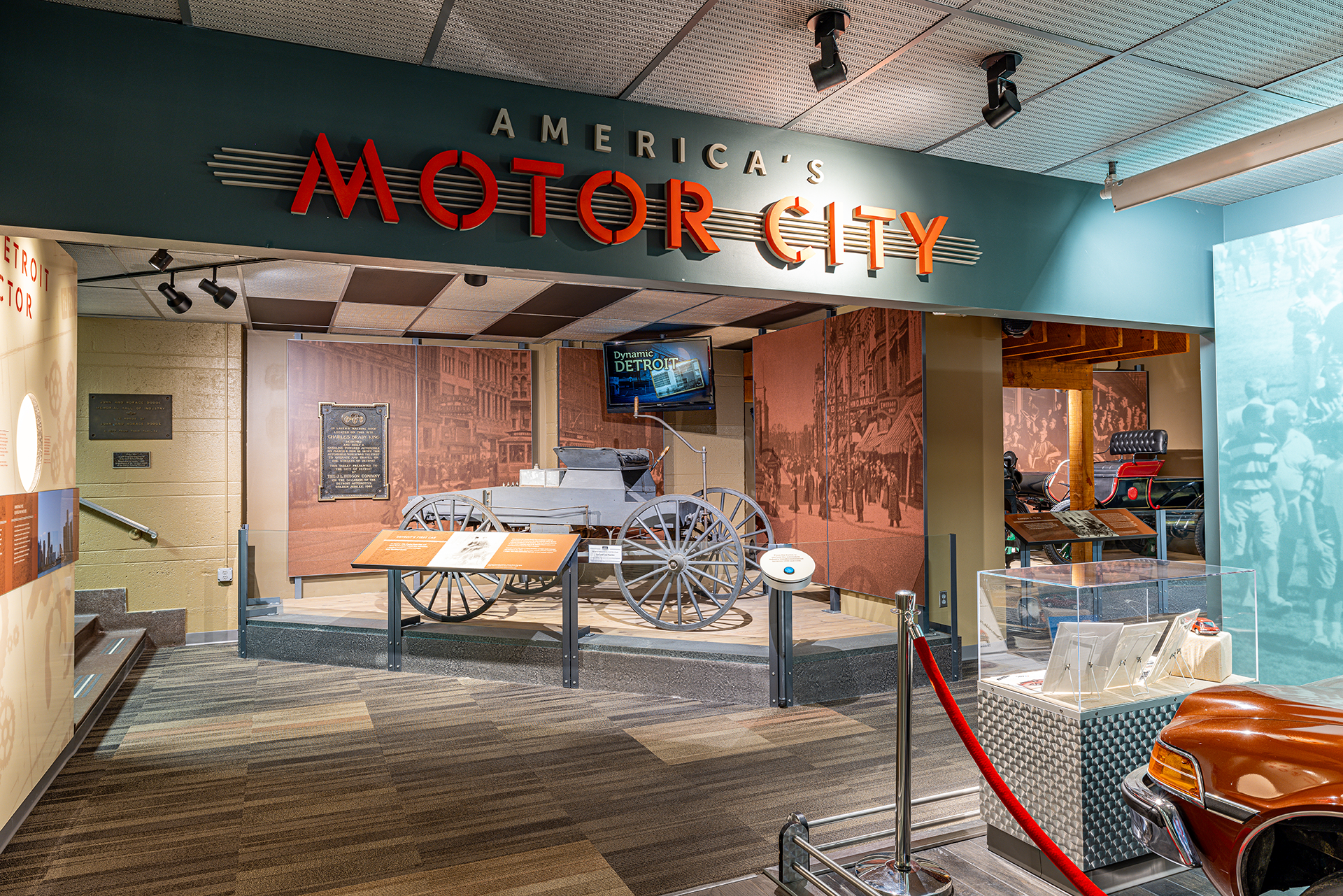
The Detroit Historical Society preserves the broader story of the whole region — every community and background that shaped metro Detroit — while The Wright tells the African American story that is inseparable from it. The two institutions formalized their partnership in 2019 to pursue this mission together, and between them, they care for nearly 300,000 artifacts that belong to the public.
Why do these institutions need public funding — didn't they get by before?
Both institutions have survived by drawing down their reserves for years. This millage guarantees their future. It ensures that free admission, school programs, and the care of nearly 300,000 artifacts are stable and permanent, instead of dependent on funding that is uncertain from year-to-year.
Why are my taxes paying for this — isn't fundraising up to the museums?
These aren't private amenities. They're publicly owned institutions holding artifacts that belong to the people of Southeast Michigan, and they function as education infrastructure for schools across both counties.
How long does the millage last?
The millage lasts 10 years, from 2026 through 2035. After that, it would be up to voters to renew it.
What is the Fund for Culture?
The Fund for Culture is a Michigan nonprofit corporation recognized as a social benefit corporation by the U.S. Department of Treasury. Among its tax-exempt purposes, the Fund for Culture promotes the common good and general welfare of the community by informing the public on the importance of cultural and historical organizations the Charles H. Wright Museum of African American History, Detroit Historical Society, Detroit Historical Museum and the Dossin Great Lakes Museum. As part of its mission, the Fund for Culture provides financial support to Yes To Our Story.
Who put this on the ballot?
The millage was placed on the ballot by the Southeast Michigan Public Historical Museum Authority, a joint public authority established by Wayne and Oakland counties under Michigan law to support the region's historical museums.
What do I get for my $30?
The millage provides free admission to both museums for your whole family, all year. It also provides transportation for students and seniors who need it and new curriculum in classrooms across the region.
I rent — does this affect me?
This is a property tax, so it's paid directly by property owners, not renters. If you rent, you won't receive a tax bill for it. As with any change in a landlord's costs, it could factor into rent over time, but the amount here is small — about $30 a year for the average home. And the benefits are yours to use regardless of whether you own or rent: free admission for every county resident, free transportation for students and seniors, and school programs across both counties.